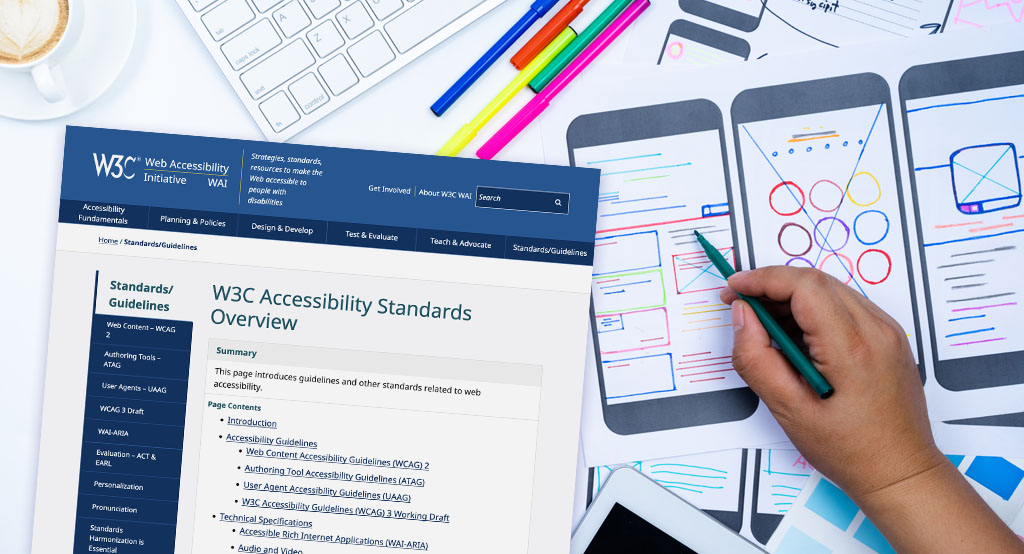
Accessible standards is the foundation of digital products and closely related to human-centered design. The best apps are built around people’s interests and wants, while making sure the app is accessible to everyone, regardless of physical limitations.
Make Accessibility Your Design Flagship
We naturally look to our competitors for design inspiration. We might be inclined to follow eye-catching design trends, without considering the implications for our own business. Great design can also be effective with simpler, accessible solutions.
When product design is built with accessibility in mind, you will eliminate many potential pain points for customers. More than anything, people need simplicity when using the web and by following simply standards you help make your app more efficient.
- Colour contrasts are obvious, for visually impaired users
- Design for touch, swipe, mouse and keyboard use
- Typography should be legible and readable
- Image text descriptions for screen readers
Designing apps should be a fun, creative process and work equally well for people with physical impairments or in difficult environments. When you incorporate accessibility standards into your design brief, this will inevitably help business goals.
W3C Provide The Accessible Framework
The basics of accessibility compliance ensures apps can be enjoyed by everyone, of all ages, particularly those with physical restrictions or health conditions. Designers consider the context in which people are interacting with software, particularly smart phones, as we are often not sitting comfortably at a desk when using the internet.
“Web accessibility encompasses all disabilities that affect access to the Web, including: auditory, cognitive, neurological, physical, speech, visual.” W3C Web Accessibility
HTML standards for websites evolved from guidelines set out by the W3C (World Wide Web Consortium), standards that emphasised equal access to web apps for those with physical impairments. In some cases laws will enforce these standards, particular government websites. However, any business is foolish to ignore them completely.
How Accessible Is Your Website?
In reality, most websites are not fully compliant with W3C standards. W3C provide a free HTML Markup Validator, perfect for checking how accessible your website is. The tool will flag up coding issues that you can then pass onto your development team.